AWS D1.1 Structural Welding Code Steel: Complete Guide
5 de nov. de 2026 ·
6m 43s
Descarga y escucha en cualquier lugar
Descarga tus episodios favoritos y disfrútalos, ¡dondequiera que estés! Regístrate o inicia sesión ahora para acceder a la escucha sin conexión.
Descripción
In heavy structural fabrication, energy infrastructure, and civil projects, a single weld can dictate whether an asset endures cyclic fatigue or suffers catastrophic failure. The AWS D1.1 Structural Welding Code...
mostra más
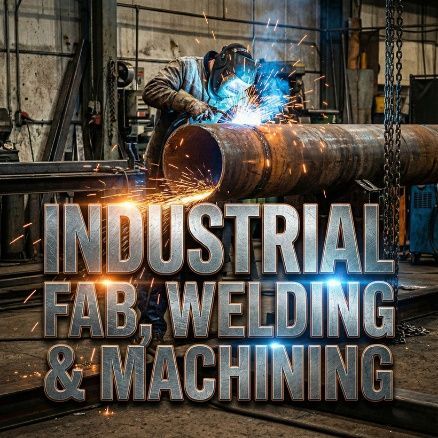
In heavy structural fabrication, energy infrastructure, and civil projects, a single weld can dictate whether an asset endures cyclic fatigue or suffers catastrophic failure. The AWS D1.1 Structural Welding Code acts as the definitive operational framework for carbon and low-alloy structural steels, establishing metallurgical baselines, parameter envelopes, and verification protocols that remove guesswork from industrial fabrication.On this episode of Industrial Fab, Welding & Machining, the engineering specialists at LTJ Industrial Services examine the core mechanics of AWS D1.1 compliance, procedure prequalification boundaries, heat input physics, and the non-destructive testing protocols required to guarantee joint integrity.Technical Comparison: Prequalified WPS vs. Testing-Qualified Procedures
Read More
Learn more about LTJ Industrial Services at www.ltjindustrial.com/
mostra menos
- WPS Qualification Protocols:
- Prequalified WPS: Bypasses destructive laboratory testing only when joint design, base metal specifications (ASTM approved grades), and welding parameters fit strictly within the pre-cleared criteria of the AWS D1.1 standard.
- Testing-Qualified WPS: Required whenever introducing unlisted alloy compositions, novel joint geometries, or parameters outside prequalified tolerances; validated exclusively via an authenticated Procedure Qualification Record (PQR) with mechanical testing.
- Thermal Control & Metallurgical Protection:
- Unmonitored Thermal Cycling: Excessive heat input coarsens grain structures and reduces tensile strength in the Heat-Affected Zone (HAZ), while insufficient preheat accelerates cooling and invites hydrogen-induced cold cracking.
- Engineered Thermal Windows: Calibrated preheat, interpass temperature monitoring, and travel speed controls regulate cooling rates, ensuring complete fusion while preserving material ductility and impact toughness.
- Fit-Up & Quality Verification:
- Uncalibrated Joint Fit-Up: Tolerating variations in root openings, groove angles, and edge alignments produces stress risers, lack of penetration, or excessive burn-through.
- Precision Joint Tolerance: Demands exact joint fit-up within code tolerances, paired with multi-layer verification spanning visual inspection (VT), ultrasonic testing (UT), or radiographic testing (RT) against strict acceptance criteria.
- Verify Prequalified Parameter Boundaries: Audit base metal chemistry, joint bevels, and backing configurations against AWS D1.1 prequalification requirements before bypassing formal coupon testing.
- Standardize Calibrated Thermal Monitoring: Enforce preheat and interpass temperature logging using thermocouples or temperature-indicating crayons to prevent hydrogen embrittlement.
- Enforce Welder Continuity Telemetry: Maintain active six-month welder performance qualification (WPQ) logs confirming specific process usage to prevent certification lapses.
- Maintain Comprehensive Material Traceability: Link all structural welds directly to Mill Test Reports (MTRs), welder identification stamps, and CWI inspection logs for lifecycle auditing.
Read More
Learn more about LTJ Industrial Services at www.ltjindustrial.com/
Información
| Autor | Don Markland |
| Organización | Don Markland |
| Página web | - |
| Etiquetas |

Copyright 2026 - Spreaker Inc. an iHeartMedia Company

Comentarios